At a glance
- Around £25,000 saved every year
- Nearly £75,000 returned over the contract
- 24x return on setup cost
- 6-month trial with 16 colleagues and 40 beacons
Project details
- Client: A further education college, part of a multi-campus college group
- Sector: Education, £425,000 annual cleaning contract
- Solution: Nviro and Exact Comms contactless workforce management
- Trial: Six months, 16 cleaning colleagues, 40 Bluetooth beacons
- Recognition: Winner, CSSA Innovation Showcase, The Cleaning Show 2025
Introduction
A further education college, part of a multi-campus college group, welcomes students, staff and visitors through its doors every day. With busy science labs, art studios and washrooms to look after, the college needed a clearer picture of when and where cleaning was happening, and proof that every space was getting the care it needed. It also wanted to make sure colleagues working alone, early in the morning or late at night, were safe and supported.
By using Exact Comms smart technology, we found a solution.
Better tools for the people who do the work
At Nviro, we are always looking for practical ways to work smarter for the colleges, schools and councils we look after. Not technology for the sake of it, but tools that make life easier for our colleagues and give our clients real proof that the job has been done well.
That is exactly what our six-month trial with Exact Comms at one of our further education clients set out to do. The contactless system gave us a clear, real-time picture of how cleaning time is spent across campus, without adding paperwork or changing the way our team goes about their day.
The result? Fairer workloads, stronger safeguarding for colleagues working alone, and money returned to the college.
The challenge
The college group wanted clear answers to four simple questions:
- Presence: Who is on site, and when?
- Coverage: Which areas have been cleaned, and when?
- Time: How long does each space really take to clean, compared with the plan?
- Safeguarding: Are colleagues working alone safe, supported and accounted for throughout their shift?
Paper sign-in sheets, spot checks and good old-fashioned trust have served the sector well for years. But they cannot give the kind of evidence you can confidently put in front of an auditor or bring to a contract review.
The solution
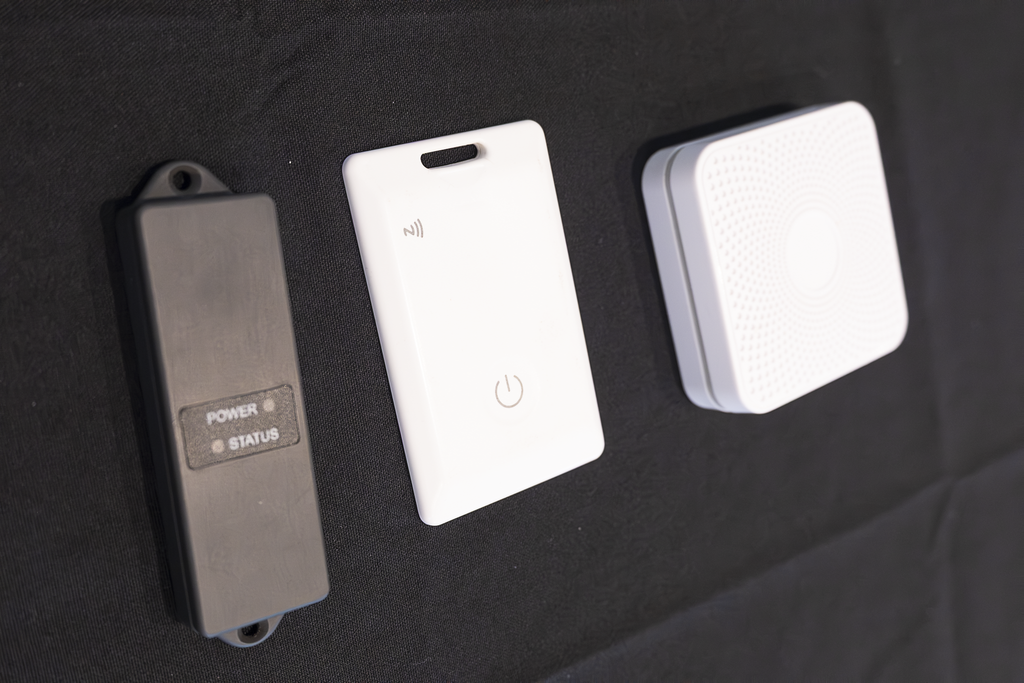
We introduced Exact Comms, a contactless system that runs on Bluetooth Low Energy (BLE).
How it works
Small, battery-powered beacons sit in key areas around the building. Each colleague carries a slim Bluetooth badge, about the size of a bank card. As they move around the site, their presence is logged automatically. No scanning, no clocking in and no phone apps.
On site
We ran the trial for six months with 16 of our colleagues on site. Forty beacons were carefully placed around the campus to make sure we got the clearest possible picture.
Why it works
- Nothing to install, nothing to disrupt. No Wi-Fi, no cabling and no strain on IT. The beacons work on their own, even in signal blackspots, and never get in the way of teaching.
- No personal phones. Colleagues do not use their own devices, so there are no privacy worries and no extra kit to buy.
- A smoother start to every shift. No queue at the sign-in point, so teams can get straight to work as soon as they arrive.
- Nothing for the college to manage. Live dashboards and clear visibility, without any of the admin.
- Proof, built in. Live data feeds straight into compliance reporting, welfare alerts and ESG reporting.
What we learned
1. Understanding where the hours go
The real value of the data was not just in measuring hours. It was in explaining them.
- Some spaces need more time. Science labs, art studios and busy washrooms regularly took longer than the contract specification allowed for.
- Some areas needed fewer visits. Certain zones were being cleaned more often than the specification asked for, so we could free up those hours or put them where they were needed most.
- Effort, not efficiency. Without data, a room that takes longer can look like a performance issue. With it, we could see whether a space genuinely needed extra care, or whether colleagues were kindly picking up extra requests from teaching staff along the way.
2. Real savings, passed straight back
Once we could see exactly where time was going, we adjusted hours and returned the savings to the college:
- Around £25,000 saved every year by removing unnecessary routine hours
- Nearly £75,000 returned to the college over the remaining three years of the contract
- A 24x return on a setup cost of just over £3,000
3. Proof you can rely on
- Problems fixed before anyone notices. If a time-critical clean, such as before morning lectures or evening lock-up, is at risk of being missed, an alert goes out so we can act straight away.
- Evidence on record. Digital logs confirm washroom checks happened when they should, ready for reviews, contract renewals and governance.
- Less paper, faster answers. Digital logs replace paper sign-in sheets and timesheets, cutting waste and turning queries that once took days into a conversation of minutes.
4. Looking after colleagues who work alone
Many of our colleagues start early or finish late, often on their own. If a badge stays still in a higher-risk area for longer than expected, the system automatically triggers a welfare check. Our colleagues know someone has their back, and the college can see its duty of care in action.
Support, not surveillance
We know tracking technology can raise questions. Is it there to help people, or to watch them?
At this college, the answer was clear. The data showed that when a clean took longer, it was down to what the room needed, not how fast someone was working. That led to fairer, updated specifications for the team.
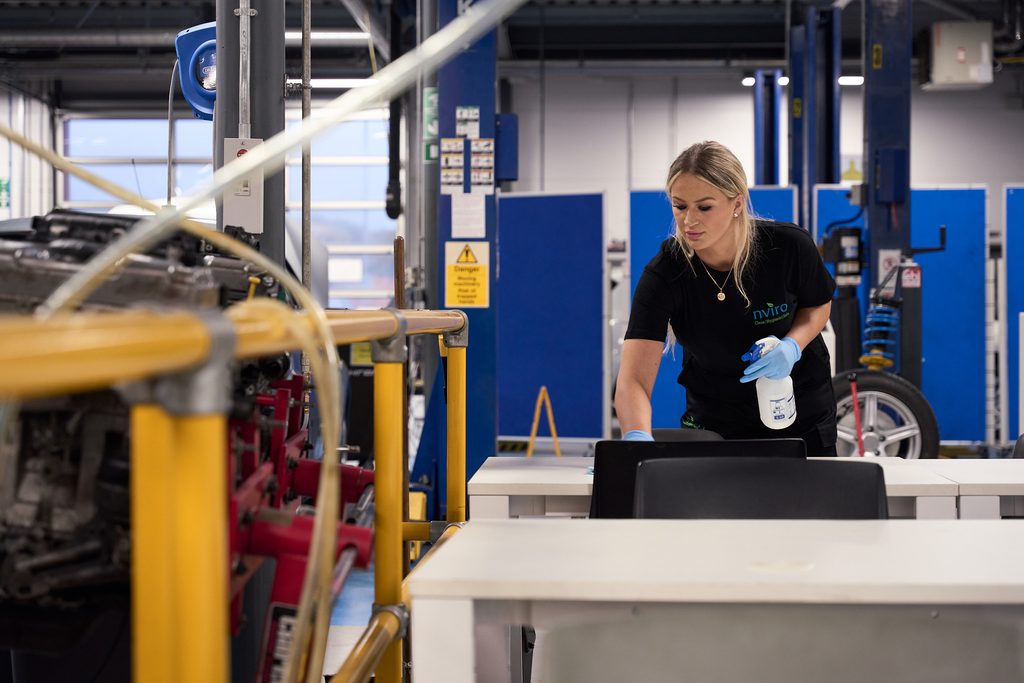
With no manual clocking and no tracking of personal phones, shifts became easier, safer and less intrusive. That matters to us. Our colleagues are the reason the buildings we look after are clean, hygienic and safe, and the tools we give them should make their work easier, not harder.
What’s next
The trial shows what is possible when Nviro’s people and operational know-how come together with Exact Comms’ contactless data. It was also recognised as a winning technology at the CSSA Innovation Showcase at The Cleaning Show 2025.
Building on that success, we are now rolling out Exact Comms across more of the group’s campuses and other client sites in the region. Because the setup is so simple, it would work just as well in schools, universities, town halls, libraries, leisure centres and council offices: anywhere our colleagues keep people’s buildings clean, hygienic and safe.
Let’s talk
Curious how contactless workforce management could save money and strengthen compliance at your site? We would love to show you.
New to Nviro?
Get in touch to find out how we can support you.
Already a client?
Speak to your Head of Service to arrange a site assessment.